OlPaint wrote:The War Years dirtied up many a busy road engine. Moreover, many of the "engine wipers" had been drafted to server on the US Military Railroads in European Theater. Engine "housekeeping" with an oily rag took a back seat while everyone was engaged "hauling the freight" for the war effort.
It would be fantastic if we could get the "dirty" repaints posted to the Library of all these working thoroughbred horses that were "run hard and put up wet" for all of us to enjoy.
OlPaint
Women took over many of the lighter duties while the men were fighting: keeping the engines clean.
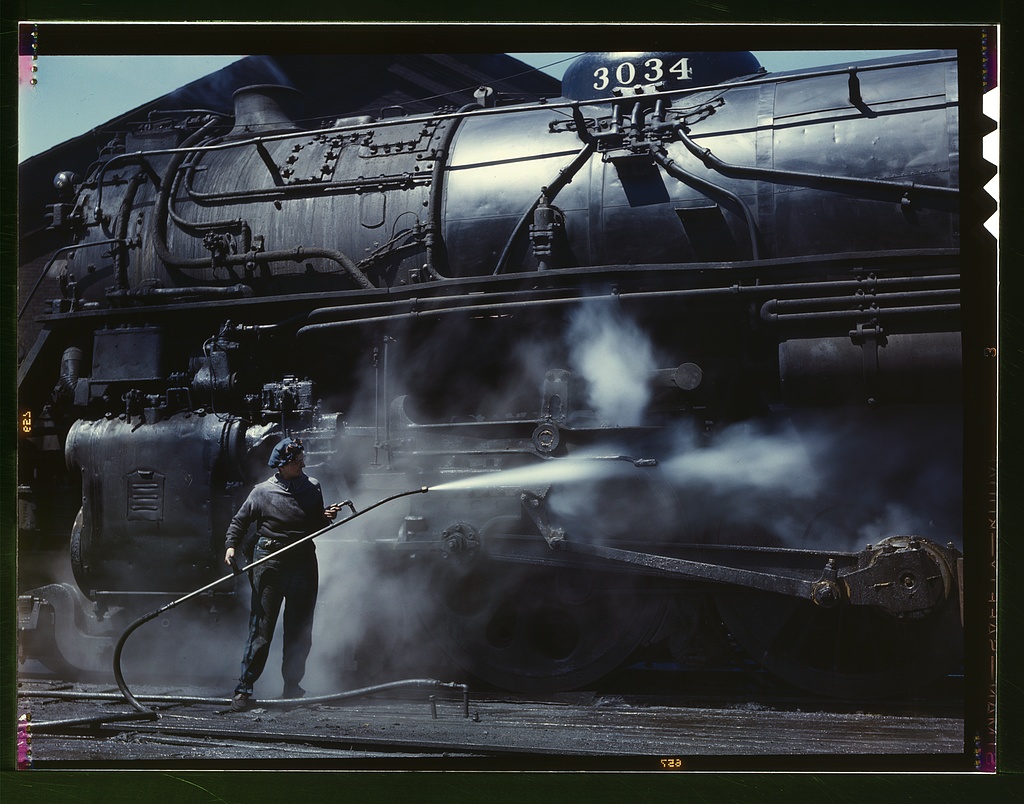
"Mrs. Viola Sievers, one of the wipers at the roundhouse giving a giant "H" class locomotive a bath of live steam, Clinton, Iowa. Mrs. Sievers is the sole support of her mother and has a son-in-law in the Army" from the fantastic Library of Congress collection.
Later, in the 50's towards the end of steam, many roads essentially ran their steam locomotives into the ground. You'll find some very dirty engines, with scale crusts round broken stay bolts and leaking fittings adding their white marks to the general grime and dirt.
My biggest problem is probably that no two steam locomotives were weathered or dirty alike. So each road number should have individual weathering, dirt, grime, oil stains, soot, rust and limescale deposits.
 Posted: Tue May 07, 2013 5:08 pm


 )
)
